High Voltage and the Importance of Protection
While the term high voltage, which is frequently encountered in electrical energy systems, continues to be effective in a wide range of areas, from power lines and transformers to industrial applications and laboratory tests, it also poses a serious safety risk with the possibility of short circuits. Therefore, the design, operation and especially the protection system of high voltage devices require special attention.

What is Spark Gap Technology?
What is Spark Gap Technology?
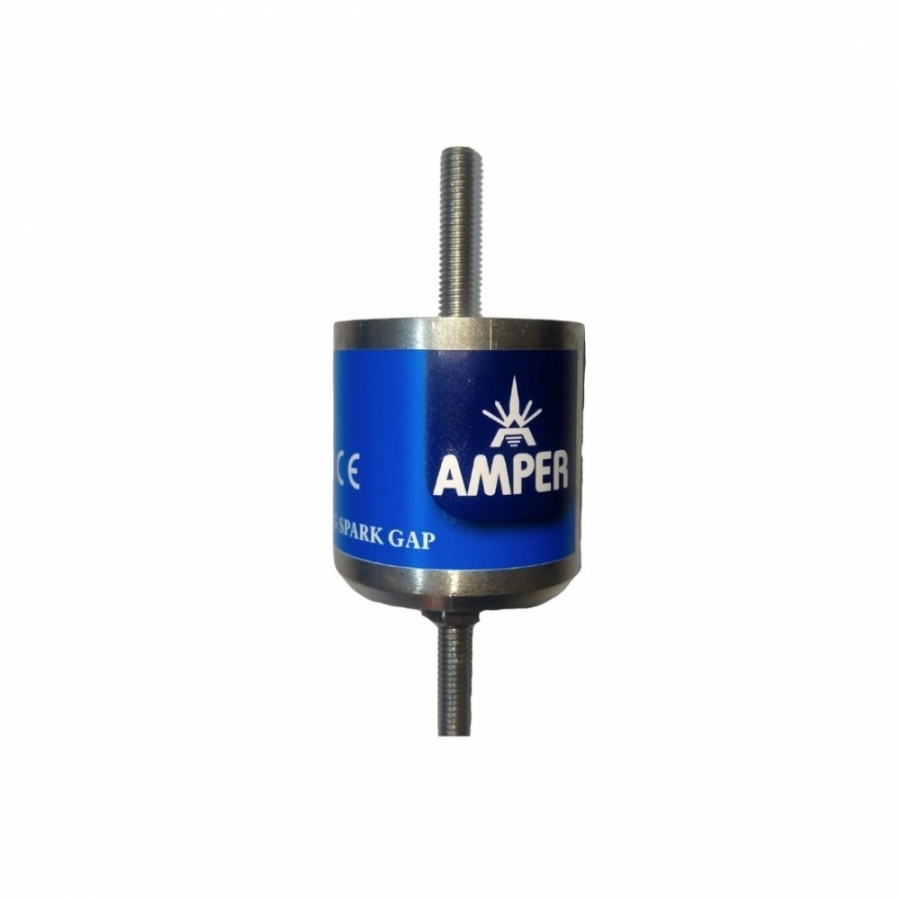
Spark gap technology is a technology used in high voltage electrical circuits and has become necessary in many applications. In high voltage circuits, the sudden discharge of accumulated energy often produces an explosion or spark, which can lead to serious injuries, fires and explosions. At this point, spark gap technology manages high voltage in a more controllable way and thus provides safe operation. Spark gap technology works by adjusting the distance between two electrodes, usually located in a gas-filled gap. The distance between the electrodes is determined according to the nominal voltage of the system being studied, and when the high voltage exposed exceeds this nominal value, the gas molecules in the gas-filled space are ionized by the effect of the electric field. As a result, the electric current flowing under high voltage is discharged through the resulting spark, ensuring the safety of the system in a controlled manner.
Protection System with Spark Gap TechnologySpark gap technology is a technology used in high voltage electrical circuits and has become necessary in many applications. In high voltage circuits, the sudden discharge of accumulated energy often produces an explosion or spark, which can lead to serious injuries, fires and explosions. At this point, spark gap technology manages high voltage in a more controllable way and thus provides safe operation. Spark gap technology works by adjusting the distance between two electrodes, usually located in a gas-filled gap. The distance between the electrodes is determined according to the nominal voltage of the system being studied, and when the high voltage exposed exceeds this nominal value, the gas molecules in the gas-filled space are ionized by the effect of the electric field. As a result, the electric current flowing under high voltage is discharged through the resulting spark, ensuring the safety of the system in a controlled manner.
One of the equipment where spark gap technology is widely used in electrical systems is surge arresters. Sudden voltage increases caused by lightning strikes, switching operations or other reasons are dampened with this technology and negative effects are eliminated. In this way, the possibility of high financial losses, especially in facilities where production continuity exists, is easily prevented with a low-cost investment. Surge arresters using diode, varistor and spark gap structures have their own advantages and disadvantages. While diode and varistor type surge arresters have fast but low discharge capacity, although the response time of spark gap type surge arresters is slightly reduced, their discharge capacity reaches quite high levels. In addition, thanks to the chemical damping of spark gap technology with carbon rings, there is no risk of burning and it offers indefinite protection. Considering that a lightning strike of 200 kA may occur and affect an area of 2 km in diameter, the use of spark gap technology in surge arresters for class B protection becomes inevitable.

One of the equipment where spark gap technology is widely used in electrical systems is surge arresters. Sudden voltage increases caused by lightning strikes, switching operations or other reasons are dampened with this technology and negative effects are eliminated. In this way, the possibility of high financial losses, especially in facilities where production continuity exists, is easily prevented with a low-cost investment. Surge arresters using diode, varistor and spark gap structures have their own advantages and disadvantages. While diode and varistor type surge arresters have fast but low discharge capacity, although the response time of spark gap type surge arresters is slightly reduced, their discharge capacity reaches quite high levels. In addition, thanks to the chemical damping of spark gap technology with carbon rings, there is no risk of burning and it offers indefinite protection. Considering that a lightning strike of 200 kA may occur and affect an area of 2 km in diameter, the use of spark gap technology in surge arresters for class B protection becomes inevitable.
Spark Gap Technology Application Areas
Spark gap technology, as mentioned above, is widely used in protecting the system against sudden voltage increases and lightning. In addition, it is also used in testing high voltage equipment such as transformers and capacitor banks, in providing wireless communication by producing high-frequency signals with oscillators, in ionizing gas discharge lamps and using them as light sources, and in examining the behavior of the plasma structure by utilizing the jump between electrodes. However, since it involves a technology that works under high voltage, it is very important to design and use it correctly despite the risk of life safety.
Spark gap technology, as mentioned above, is widely used in protecting the system against sudden voltage increases and lightning. In addition, it is also used in testing high voltage equipment such as transformers and capacitor banks, in providing wireless communication by producing high-frequency signals with oscillators, in ionizing gas discharge lamps and using them as light sources, and in examining the behavior of the plasma structure by utilizing the jump between electrodes. However, since it involves a technology that works under high voltage, it is very important to design and use it correctly despite the risk of life safety.